
Attenborough: The risk-taker who changed how we see Earth
Sir David Attenborough, now 100, is the calm, trusted voice of the natural world.
But his 70-year career reveals a broadcaster who repeatedly took risks, backing new technology and venturing into remote, often perilous places.
From the launch of colour television to a record-breaking dive at the Great Barrier Reef at 89, he has sought new ways to show the planet and its inhabitants.
Through rarely-seen footage and photographs, we trace the broadcasting firsts that helped change our understanding of life on Earth.


The wild, in our homes

A young David Attenborough was growing increasingly bored of his job editing science books for children when he decided to apply for a job at BBC Radio.
His application was rejected, but a few weeks later he received a letter asking if he might be interested in working for the BBC’s new television service.
Initially unsure, and worried about leaving a full-time position for a three-month contract when he had a family to support, he was eventually persuaded to join as a producer across all factual output.
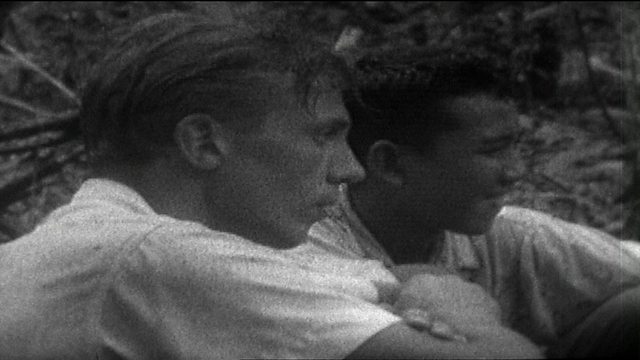
Those programmes were broadcast almost entirely live, but he soon came up with the ground-breaking idea of Zoo Quest: the first series to combine live studio presentation with natural history footage shot on location.


Attenborough himself joined the expeditions to find rare animals in the wild and bring them back to London Zoo, something he acknowledged would no longer be done today.
"Seeing the African rainforest fauna for the first time, the sheer abundance of it, the super-abundance of it – just breathtaking."
“Then, we thought the natural world was healthy, full of animals. If an animal died in the zoo, you simply went out and got another. You wouldn’t do that anymore.”
These were also his first opportunities to explore the wonders of nature – an early sign of the years of globetrotting to come.
Listen: Attenborough on first seeing the African rainforest
Attenborough and his team were the first to film rare birds like the white-necked rockfowl, and the elusive Komodo dragon – a giant lizard which had barely been seen by non-indigenous people.
A colour revolution

Attenborough did not own a television set when he joined the BBC in 1952 but within 15 years he would become controller of BBC Two – one of only three television channels in the UK at the time.
On Radio 4's Desert Island Discs, he reflected on that opportunity, saying: "It’s a marvellous sensation to be told: 'Here are a few million pounds. Surely you ought to be able to think of a few programmes?'"

Listen: Sir David on running BBC Two
One of his early achievements was launching colour television: "I became very anxious that we should be the first in Europe – and our competitors were the Germans."
A broadcasting revolution had begun.


Two years later, in 1969, Attenborough made the most of the new high fidelity technology with a programme that would "find the loveliest things created by civilisation in the past 2,000 years, and put them on the screen".
This was the landmark series Civilisation, written and presented by art historian Kenneth Clark. The show was the first of a new type of big-budget documentary and set a standard for broadcasters around the world.
It was quickly followed by another blockbuster series, The Ascent of Man, in which Jacob Bronowski traced the history of scientific thinking and invention.


Back in front of the camera

"I am a programme man, that’s what I enjoy," Attenborough said after he unexpectedly left his executive job to become a freelancer.
The idea for a Civilisation-type series on the natural world had been on Attenborough's mind for quite some time.
In 1997 he said: "If someone had come to me when I was either at BBC Two or as director of programmes and said 'We've got this great idea – why don't we a survey of the natural world?', there was no way in which I could have said no [to someone else taking it on]."
Fortunately for him, no-one else came up with the idea meaning he could develop it himself. Filming took four years. The result was Life on Earth.


It also gave us one of television’s most unforgettable moments as the presenter drew the curiosity of a group of mountain gorillas in Rwanda.
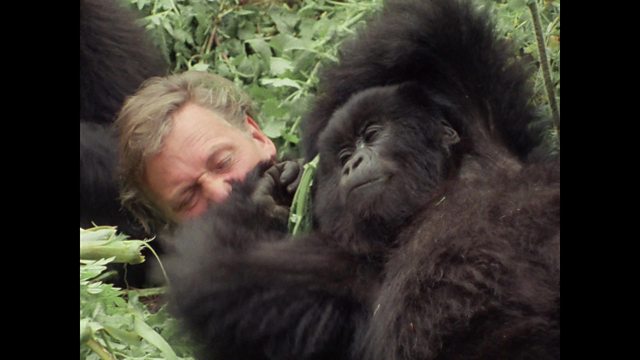
"The encounter I had with the gorillas – it seemed to go on forever. And I was kind of in paradise; I lost all sense of time."
Listen: Sir David on how the gorilla meeting was almost lost
Sequels including The Living Planet and The Blue Planet followed, collectively forming a comprehensive encyclopedia of the natural world.
Simultaneously, he became the BBC’s definitive voice of natural history, narrating more than 300 episodes for flagship strands like Wildlife on One and Natural World.
Pushing boundaries for a new generation

Throughout his career, Sir David has used new technologies to help show the complexity of nature in ever more detail.
In Blue Planet (2001), considered the first comprehensive series on the world's oceans, low-light cameras revealed never-before-seen creatures of the deep sea – like the Dumbo octopus and the Hairy anglerfish.
Planet Earth (2006) was the most expensive nature documentary ever commissioned by the BBC and the first BBC wildlife series shot in high definition.
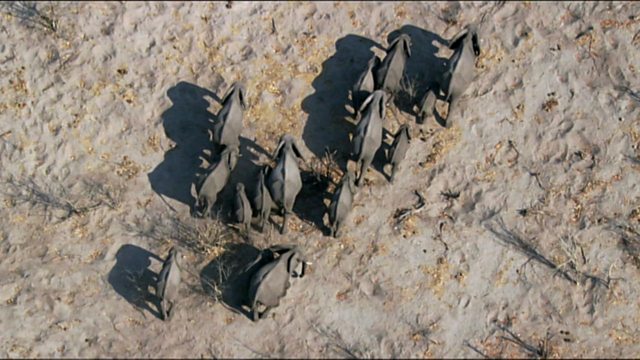
Using military-grade stabilized camera mounts, crews could film from high-altitude helicopters, capturing the scale of migrations and hunts for the first time without alerting the animals.


Driven by technical ambition, he undertook a record-breaking 1,000-foot (300 metre) submersible dive on the Great Barrier Reef in 2015 – becoming, at 89, the oldest person to reach such depths.
The descent was captured for a new television series and a virtual reality experience developed in collaboration with the Natural History Museum.
Sir David’s work now spans every major technical shift in broadcasting history, including VR – which secured him yet another Bafta.


By the 1990s, four decades into his work, Sir David’s influence had become a cornerstone of the scientific community.
"I go around to zoology departments and universities round the world and professors come up and say 'The reason I've got this professorship was that I saw Life on Earth'", he recalled.
More than 50 species – ranging from frogs and beetles to a carnivorous plant and a tropical butterfly – now bear his name in their official scientific classification.
These honours include a fossilised 'odd bird' from China and, most recently, a fungus named after him in 2025.
The first species to bear his name was identified in 1993: a marine reptile fossil discovered along England’s Jurassic Coast.

It remains a special moment for him – due in particular to a detail that might be lost on the less scientifically minded.
"There are quite a lot of Attenboroughi species, and that’s nice. But to have a genus (a group of related organisms with similar features) named after you is really something else."
Making the case for nature

Though a lifelong advocate for conservation, it was only after the turn of the millennium that his documentaries began to directly address the human toll on the environment – culminating in recent years with urgent calls to action on climate change.
In 2006, Sir David presented two documentaries for the BBC's Climate Chaos season, marking a public shift in his stance.
"I was sceptical about climate change. I was cautious about crying wolf," he explained during the launch. "But I'm no longer sceptical. Now I do not have any doubt at all. I think climate change is the major challenge facing the world."
Listen: Sir David on the need to act urgently over climate change
In 2019, at 93, Sir David took his environmental message to yet another unexplored ecosystem: Glastonbury Festival.
Following the event's ban on single-use plastics, he experienced his first rockstar moment on the Pyramid Stage, addressing an adoring crowd of over 100,000 people.

For most watching, he has been an ever-present figure, quietly – and sometimes not so quietly – advocating for the natural world.
Whether speaking to a sea of festival-goers, an auditorium of international politicians, or a 4-year-old boy named Otis, he continues to encourage us to take responsibility and assure us it is not too late to make a difference.


Photos: BBC Natural History Unit, Getty Images, Gerry Holt
Audio clips: BBC Studios, BBC Science Unit and BBC Radio 4
Additional research and production: BBC Special Projects team


